Ancient Religions
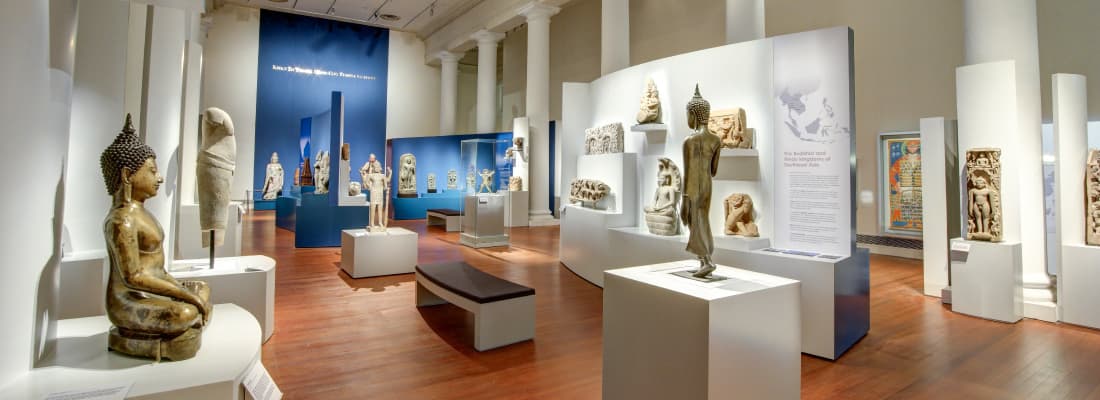
The Kwan Im Thong Hood Cho Temple Gallery
All Galleries
LEVEL 1
Maritime TradeLEVEL 2
Faith & BeliefVideo
 A Singapore Government Agency Website

Look for a lock ( ) or https:// as an added precaution. Share sensitive information only on official, secure websites.

LEVEL 1
Maritime TradeLEVEL 2
Faith & Belief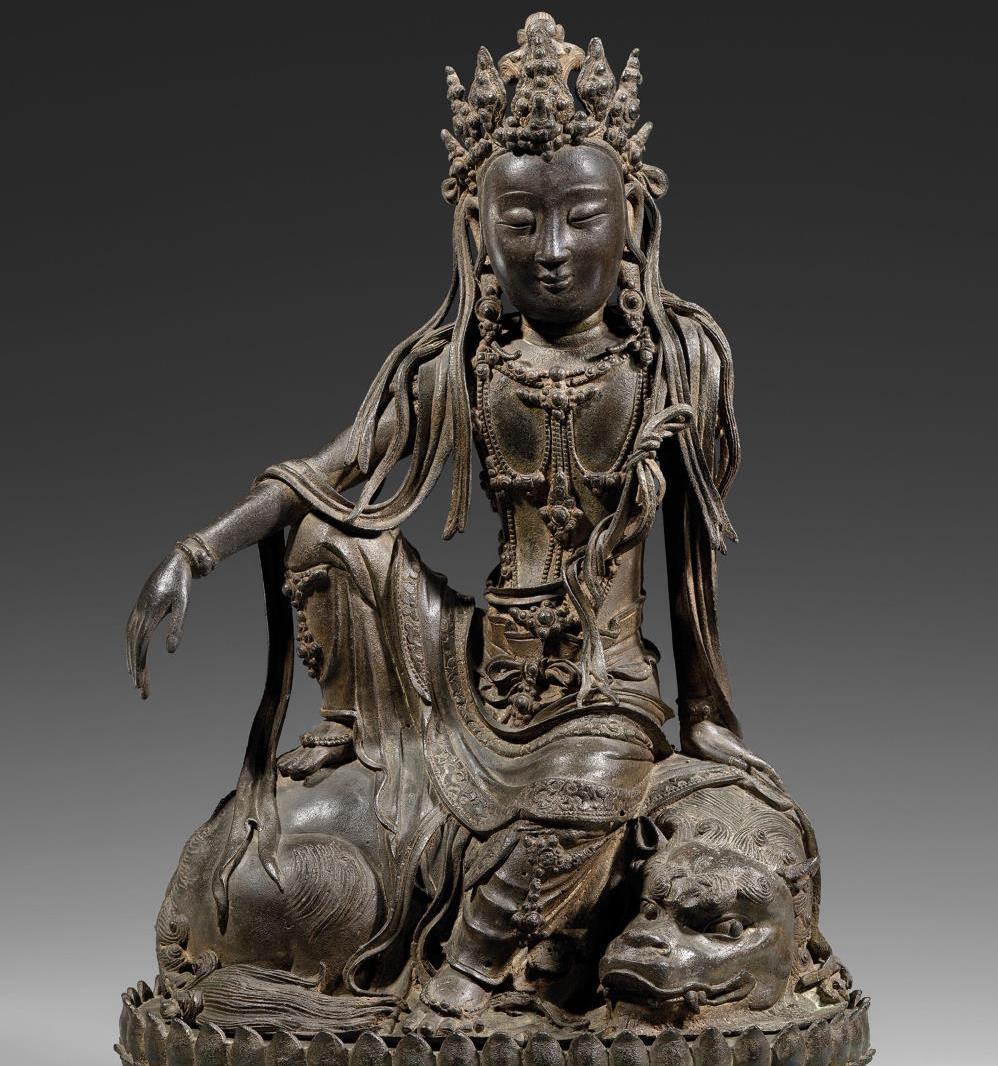
China, 14th or 15th century
Bronze, height 52.7cm
Acquired with funds from the Kwan Im Thong Hood Cho Temple
2017-00904
The presence of a tiny figure of Amitabha Buddha seated in the headdress identifies this figure as Guanyin. The lion is her because its roar ("Simhanada") symbolises the force of enlightenment. Depictions like this developed around the 11th or 12th century in India, where they were called Simhanada Avalokiteshvara. The earliest Chinese examples, called Shi Hou Guanyin, are dated to the 12th century.
China, 14th or 15th century
Bronze, height 52.7cm
Acquired with funds from the Kwan Im Thong Hood Cho Temple
2017-00904
The presence of a tiny figure of Amitabha Buddha seated in the headdress identifies this figure as Guanyin. The lion is her because its roar ("Simhanada") symbolises the force of enlightenment. Depictions like this developed around the 11th or 12th century in India, where they were called Simhanada Avalokiteshvara. The earliest Chinese examples, called Shi Hou Guanyin, are dated to the 12th century.
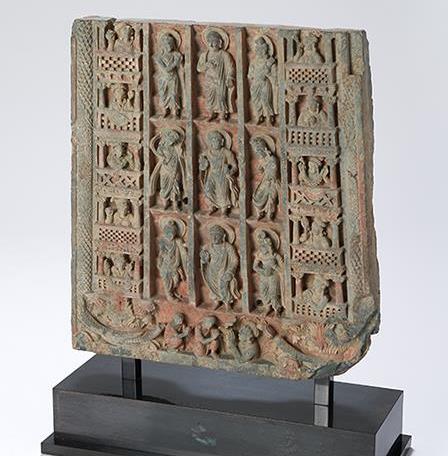
Gandhara, 3rd or 4th century
Schist, height 55cm
2014-00946
This relief panel shows a remarkable amount of lively detail. It was once part of a series on a stupa chronicling the life of the Buddha. The Buddha went to the Heaven of the 33 Gods (Trayastrimsha) to preach the law to his mother. In the three stages of his descent shown here, he is flanked by the Hindu Gods Brahma and Indra.